20 Pro Ideas For Choosing Floor Installation
Wiki Article
Subfloor Repair Is A Must Prior To Any Floor Installation
Subfloor repair may be the less glamorous aspect of flooring installation nobody likes to talk about -- and no one wants to pay for. It's not obvious that the work has been completed, it doesn't photograph well, and it adds cost to an expense that homeowners have typically already committed to a specific number. However, it is, without doubt, the single main factor in determining whether the new floor will perform right way or begins breaking down within the first year. The housing stock in Philadelphia is comprised of rowhomes, twins as well as older colonial properties across Bucks County, Delaware County ranches that have crawlspaces is especially susceptible to subfloor problems that go unnoticed until the new floor is laid down and exposes them. Here's the most important thing every homeowner needs to know prior to putting down the floor.
1. The Subfloor Is Your New Floor Is Actually Attached
It's a simple concept, but it gets lost in the excitement of deciding on materials. In the event that you decide to install nail-down flooring, glue-down LVP floating laminate or porcelain tile finished flooring is only as strong as the subfloor beneath it. If your subfloor has soft points, soft spots, moisture destruction, or even level variance will not be a thing of the past once fresh flooring is laid on top of itthe problem is telegraphed upwards. Usually, it takes months. Certified flooring installers review the subfloor prior to evaluating everything else for precisely this reason.
2. In older homes, Philadelphia has subfloor Condiments that Surprise Contractors
Houses built before 1960 across Philadelphia, South Jersey, and the surrounding counties frequently include diagonal boards rather than plywood, one method of construction that was popular at the time but causes real difficulties for the installation of modern flooring. Subfloors made of board are more susceptible to move, and also contain gaps among planks and often require an additional layer of plywood prior to laying tile or hardwood flooring is feasible. Contractors who do not mention this during an estimate either haven't looked properly or are planning to deal with it and create problems later.
3. Soft Spots are a Warning Sign, Not a Minor inconvenience
A soft spot in your subfloor - an area with a slight flex when you walk on it -usually indicates it's a sign of moisture damage, rot or delamination within the subfloor material itself. Installing flooring on an area with a soft patch won't correct the issue, it simply hides it temporarily while the damage persists beneath. When installing hardwood floors located in Philadelphia specifically, the soft spots pose a serious threat to the staple or nail anchor that keeps the floor attached. Floors that start lifting and squeaking or breaking away from the subfloor typically traces back to a soft spot that was not addressed prior to installation.
4. The variation in level affects every flooring Type in a Different Way
The majority of flooring companies specify the maximum allowed variation in subfloor flatness -typically 3/16 of a millimeter over the span of 10 feet. This tolerance is exceeded affects the different substances in different ways. Tile flooring is the least forgiving: high spots crack tiles, and low spots chip grout lines as well as an uneven subfloor that is covered with large-format stone is guaranteed to be a cause of callbacks. LVP is able to tolerate minor variations better than many other brands, but substantial valleys or ridges do show through over time. Hardwood is able to signal irregularity by sending hollow spots, and even movement. Subfloor leveling compound or targeted grinding are options, but skipping them is the issue.
5. Subfloor moisture Subfloor is a distinct issue from the humidity of your home.
There are two distinct problems that require separate solutions. Ambient indoor humidity affects the way wood flooring expands with the seasons. Subfloor moisture -via vapor transmission in concrete that wicks through old boards subfloors, or residual dampness caused by leaks -- directly attacks adhesive bonds, causes floating floors ' to buckle, which encourages the growth and growth of mold beneath flooring that has been laid. A proper moisture reading before floors are installed in Philadelphia homes should be a standard practice. When it's not done the contractor assumes instead of understanding what's happening.
6. Concrete Slabs require Moisture Testing before gluing-down installation
The glue-down process for hardwood and LVP installation over concrete is typical in Delaware County and South Jersey houses with slab-on grade construction. The information that's not widely communicated to homeowners is the fact that concrete slabs release moisture vapour in a continuous manner, and their rate matters enormously for adhesive performance. One slab who passes a visual inspection could still fail an acid test or a relative humidity probe test. Flooring adhesives applied to surfaces with high vapor emission will lose its adhesive -- often within a year -- and the floor will start to shift, bubble or break.
7. Subfloor Repairs Costs Are Hard for estimating without examining
That's why reliable flooring contractors won't offer you a precise all-in cost via phone. Subfloor repair in Philadelphia can vary from a basic patch of wood for $200 up to several dollars per square foot in a large area with extensive water damage. The only way you can tell that is through a site visit and an accurate assessment. Owners who insist on the locked-in cost before anyone has examined the subfloor are creating an unintended situation in which the contractor builds in a large amount of contingency or cuts corners if problems show up mid-job.
8. The Installation of Tiles is the Most Expensive Test of Subfloor Integrity
Ceramic tile and porcelain flooring have no flexibility. They transfer stress directly into the bond underneath them. A subfloor that has any noticeable flex may crack grout and tile, regardless of how well the tile was set. The requirement for installation of tile for subfloors is to have a structure that is stiff enough so that it meets the deflection standard engineers define as L/360this means that a 10-foot width is able to deflect only 1/3 inch when under loads. Older Philadelphia homes frequently fall short of this, without any reinforcement. The problems with bathroom tile installation in older homes are nearly always a problem with subfloor stiffness in disguise.
9. Addressing the Subfloor Now Preserves the Refinishing Value Later
One of hardwood flooring's main lasting advantages is its capacity to restore and sand it numerous at a time over the course of years. This benefit is negated if subfloor underneath it is damaged. Refinishing and sanding floors at Philadelphia requires a solid secure floorthat won't shift or flex under the sanding machinery. The subfloor issues that were insignificant during installation can be a problem when refinishing attempts are made over a period of time. Fixing the subfloor correctly from the beginning can ensure you're prepared for any subsequent maintenance the floor could ever need.
10. The Contractors Who Identify Subfloor Probleme Are the Ones That are Worth hiring
It's not always easy to believe -Nobody wants to hear that their job has become more expensive prior to the time it began. But a flooring contractor that walks your space, identifies the issues with subfloors, and then includes repair as part of their job is doing exactly the job a professional should be doing. The ones who don't mention the issue, or quote a price that is low estimates, and then proceed to lay flooring over subfloors that are damaged is the one who gets negative reviews a few months after. When you're getting estimates for flooring in Philadelphia an inspection's thoroughness prior to the time a quote is issued gives you all the information you require to know about how the installation itself will go. Check out the top rated
hardwood floor installation Bucks County for website info including hardwood floor refinishing cost Philadelphia, flooring installation Montgomery County PA, licensed flooring installers Philadelphia, licensed flooring installers Philadelphia, hardwood flooring Montgomery County, luxury vinyl flooring Philadelphia, LVP floor installation cost Philadelphia, floor installation Bucks County PA, flooring installation cost Philadelphia, hardwood floor resurfacing Philadelphia and more.
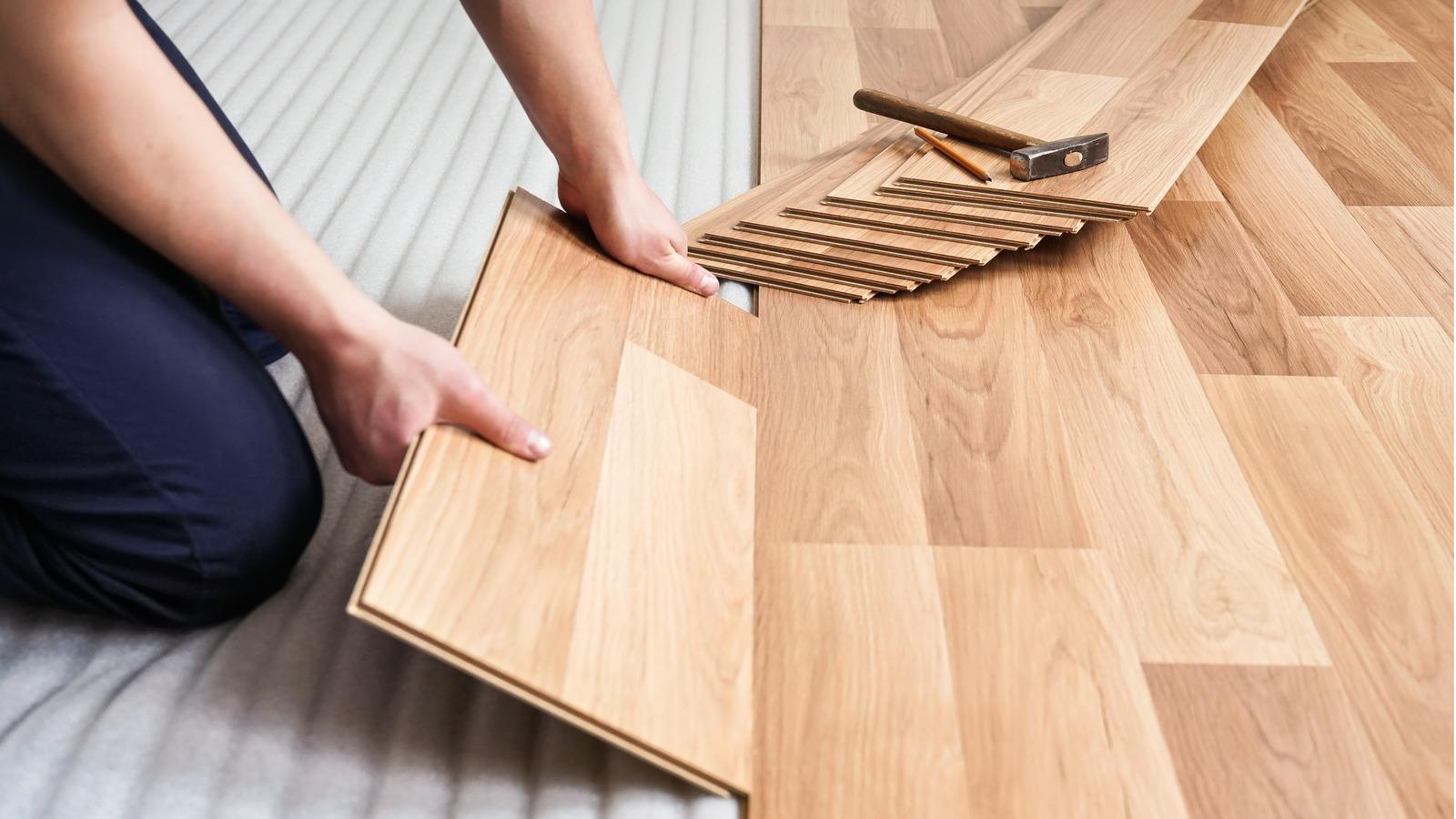
Hardwood Refinishing Vs. Replacement: What Makes Sense?
In Philadelphia homes have history embedded in their design -- the original oak strip flooring in a Germantown twin wide pine planks inside a Chestnut Hill colonial style, and decades-old hardwood floors in the Delaware County ranch that's seen three families. When floors appear rough, the instinct is often for them to be replaced. However, replacing them isn't always the most appropriate option. Refinishing may not be the most cost-effective option however it appears so on the surface. The choice between sanding or Refinishing hardwood instead of pulling out the old and beginning afresh depends on factors that only can be determined when a person who understands what they're looking at actually walks through the floor. This article will help you think about it before taking either choice.
1. Floor Thickness Is the First Aspect That Will Determine Your Options
Solid hardwood is able to be sanded, and finished multiple times throughout its lifetime -- but not indefinitely. Each refinishing operation removes thin layer of wood, and when the floor is stripped down, and is close to tongue-and-groove fastening system underneath that, it's not able to be sanded and refinished in a secure way. The most solid hardwoods are 3/4 inch thick and has approximately 1/4 inch of material above the tongue that can be used for sanding. A flooring professional can measure remaining thickness by using the gauge located in a concealed location. The measurement, above all else, decides whether refinishing is in the works.
2. Engineered Hardwood is a bit narrower in its refinishing Window
Engineered flooring has grown rapidly across Philadelphia, Bucks County, and Montgomery County homes over the over the past two decades. many homeowners don't realize the floors are engineered until refinishing comes up. The real wood veneer layer of engineered wood is less than solid wood -- ranging from 1mm - 6mm depending on the wood product this limits the number of times they can be smoothed. Thin-veneer engineered lumber may not be able for a single finishing pass or not whatsoever. Knowing which one you've got before concluding that refinishing is possible saves the expense of an estimate visit.
3. Refinishing can be significantly cheaper than Replacement in most cases.
Refinishing and sanding floors in Philadelphia typically ranges from $3 to six dollars for each square foot. Full hardwood floor replacementremoval of flooring, evaluation of subfloors new material, and installation -- can run $10 to $20 per square foot or higher depending on the flooring species as well as the method. for a 500 square feet area that's the difference between a $1500-$3000 job and a $5,000-$10,000 one. If the floor you have is sufficient thickness and no structural problems, refinishing can provide much of the visual appeal of brand new floors for much less cost.
4. Surface Wear and tear is never a reason to replace
Scratches, scratches, dullness, minor staining, and surface-level discoloration are precisely the problems floor sanding and polishing is intended to fix. They appear more ugly and are more noticeable than they actually. A properly sanded pass takes away the damaged surface layer and restores the floor to wood bare, that point, custom staining along with finishing completely restores its appearance. Philadelphia homeowners who replace floors over surface damage they could have repaired are making a costly choice based on their aesthetics, not structural real-world reality.
5. Structural Damage alters the calculation The entire calculation is altered
Warping and cupping, as well as significant damaged by water that has reached below the surface and caused rot at board at the floor level and flooring with numerous missing or loose sections differ from surfaces that wear. Refinishing focuses on surface conditionsit can't correct an area that has moved structurally because of moisture, as well as fix an area where the subfloor underneath has failed. If structural damage is apparent then the correct assessment by a flooring installer who is licensed may be that replacing the floor will be the only way to an area that will function correctly rather than just look better for a short period of time.
6. The Refinishing history of the past has an impact on the Current Decision
A floor made of hardwood that has been finished three or more times during its time may have minimal material remaining above the tongue regardless of the thickness at which it began. However, the original hardwood floor in the interior of a Philadelphia house that's never been repaired -- which happens to be quite common in older homes -- may be thicker even if it appears rough. The look of the floor isn't an accurate indicator of its the possibility of refinishing. The physical measurement, and in certain cases taking a floor vent to check a cross-section are the way a professional determines the remaining floor.
7. Custom staining that is applied during the process of refinishing may make a floor's character
One of the less appreciated benefits of refinishing is the ability to change the flooring's color completely. Custom staining hardwood in Philadelphia is a part of the refinishing process -- once the floor has been sanded to its original wood, a stain will be applied prior to the finish coats go down. For those who have lived on the orange-toned wood of the 1990s for many years are often surprised to discover that their boards may change into a cool grey or a dark walnut or a warm natural, based on the species and the stain choice. There is no need to replace them in order to change how the wood looks.
8. Assembling new Hardwood to existing flooring is Harder Than You Think.
One of the scenarios that force homeowners to replace their floors completely is when the floor is only one part that needs to be dealt with -- a section of flooring that has been damaged by water, and in addition, an area that was previously carpeted. Installing hardwood flooring to match existing old hardwood in the rest of the house is quite difficult. The wood species, the cut lines, grain patterns, and years of patina don't match exactly with new materials. Flooring contractors in Delaware County and South Jersey that are honest will inform you that a full refurbishment of the complete flooring area after patching is usually the only option to maintain visually consistent.
9. Replacement opens the doors to upgrading the material totally
Sometimes, the answer is to replace not as refinishing will be difficult, but rather because the floor will not be worth the effort. A softwood floor that is brittle and floors that have extensive subfloor problems that need to be fixed at some point, or in homes where the layout has changed and the current floor no longer makes sense and these are all situations where replacing can lead to a major upgrade. Moving from worn softwood to white oak hardwood, or from damaged real hardwood to engineered best suited to your home's environment, is a different thing than replacing an flooring that is refinishable, but not necessarily.
10. Do the assessment before you Select, Not Until You've decided
Refinish and. replace decision should be made after a professional has looked at the floor, not prior to. The majority of the reputable flooring contractors located in Philadelphia provide free estimates which include this kind of evaluation -- measuring the thickness of your floor, identifying of structural and. surface damage, moisture analysis, and a clear outline of what each route has to offer in terms of cost as well as timeline and final results. Homeowners who simply call for a replacement estimate frequently have already ruled themselves off a refinishing possibility they haven't fully explored. The test is free. The replacement, if it happens to be ineffective it isn't. Take a look at the top Have a look at the most popular nail down hardwood flooring Philadelphia for more examples including engineered hardwood installation Philadelphia, cheap flooring installation Philadelphia, flooring installation cost Philadelphia, laminate flooring installation Philadelphia, flooring contractors Philadelphia PA, ceramic tile flooring Philadelphia, laminate floor contractors Philadelphia, cheap flooring installation Philadelphia, bathroom tile installation Philadelphia, luxury vinyl flooring Philadelphia and more.
:max_bytes(150000):strip_icc()/installing-hardwood-floor-170040982-582b748c5f9b58d5b17d0c58.jpg)